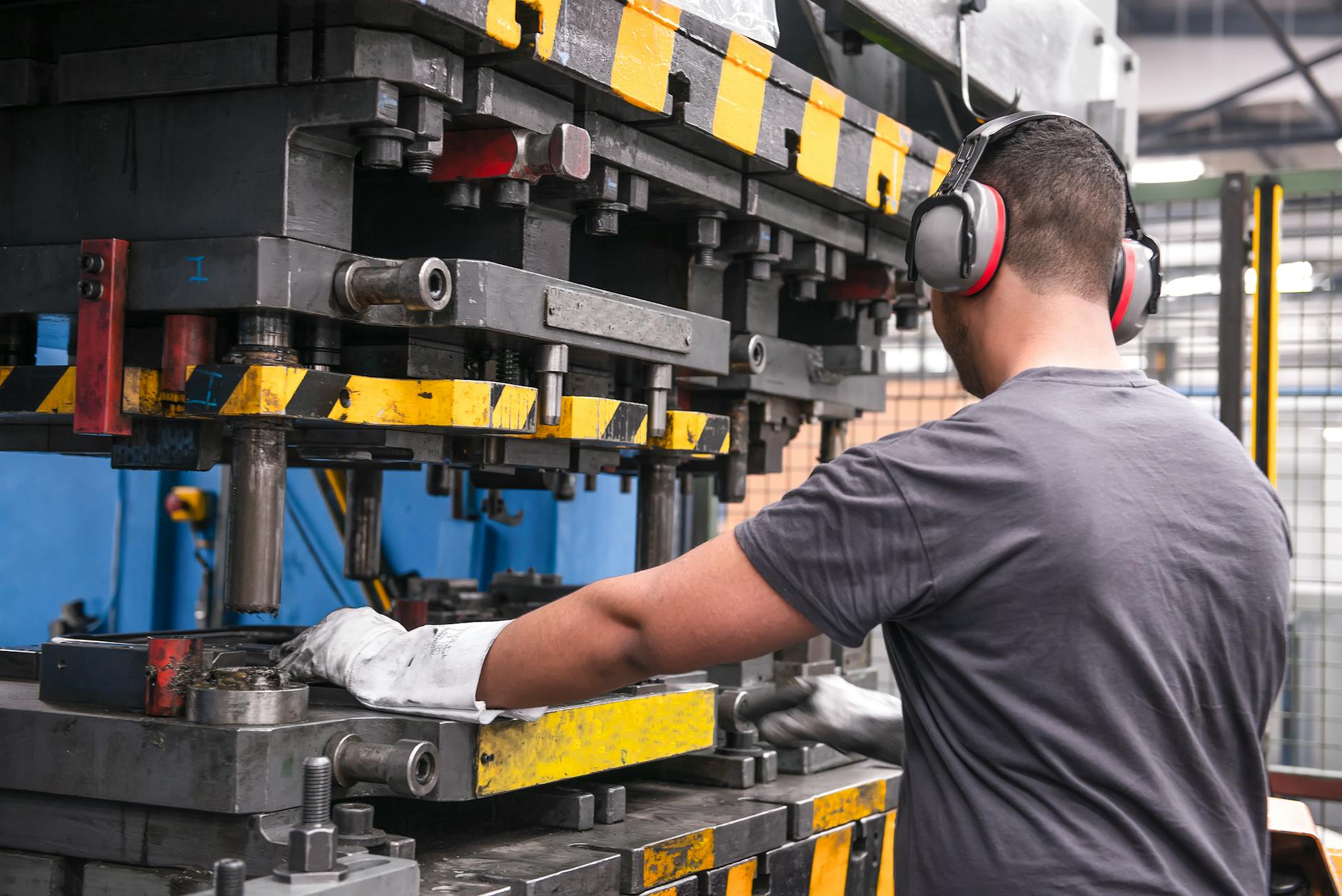
Noise-induced hearing loss (NIHL) is a preventable type of inner ear hearing loss that affects approximately 5% of the world’s population (1). According to the Occupational Safety and Health Administration (OSHA), workers are recommended to wear hearing protection for workplace noise exposure levels equaling 85 dBA and it is mandatory to wear it when noise exceeds 85 dBA calculated over an 8-hour shift (2,3). The consequences of NIHL can include symptoms of tinnitus and hyperacusis (refer to other posts for more information) and can significantly impact one’s quality of life. This post will explore more about NIHL and the appropriate hearing protection and conservation measures that are important to consider to help mitigate its effects.
Causes of NIHL
Prolonged NIHL is caused by damage to cochlear hair cells located in the inner ear (4). This damage has irreversible effects on both outer and inner hair cell function, further causing degeneration of neurons at the auditory nerve and leading to cochlear synaptopathy (5). NIHL can be caused by a single event known as impact noise, which can cause permanent damage along your auditory pathway, but it is commonly associated with long-term continuous noise exposure.
What Can Be Done?
One of the most important precautionary measures to mitigate NIHL is to wear hearing protection during activities involving loud noise. While any hearing protection is better than none at all, research suggests that custom hearing protection provides greater sound attenuation around frequencies associated with noise from 500 to 2000 Hz. Custom hearing protection can offer a more appropriate seal and greater canal depth, which are two of the most important features for optimal noise reduction (6). Furthermore, double hearing protection is often utilized for high noise environments in which ear muffs are worn over earplugs and is recommended for people in noise exposure of 100 or more dBA impact noise (7).
While hearing protection is most commonly associated with work, it is equally important for recreational activities as well. Hearing protection can be used for in-ear monitors for musicians and pilots, flying, hunting, shooting, and other purposes. Filtered hearing protection is often used for leisure purposes, which allows the signal of interest in while cutting out unwanted noise and distortion. Furthermore, filtered hearing protection can allow for natural ventilation of the ear and further reduce the buildup of moisture (8).
Recommendations
It is important to raise awareness about the effects NIHL has on hearing. Ideally, custom-fitted hearing protection is recommended to help mitigate the effects of NIHL as much as possible in loud environments. For hearing aid users, it is important to know that hearing protection always takes precedence over hearing aids. So in any environments where hearing protection is recommended, it is advised to take hearing aids off. Furthermore, taking precautionary measures around noise can include distancing yourself from noise sources, appropriate education through hearing conservation programs at work, and knowledge about ways to mitigate NIHL. Lastly, receiving periodic hearing assessments from a certified hearing care professional can be important for those who have a history of occupational or leisure noise exposure to help monitor and to best protect their hearing in loud environments.
References
- Natarajan N, Batts S, Stankovic KM. Noise-Induced Hearing Loss [published correction appears in J Clin Med. 2024 Feb 07;13(4):]. J Clin Med. 2023;12(6):2347. Published 2023 Mar 17. doi:10.3390/jcm12062347
- Occupational Safety and Health Administration. Occupational Noise Exposure. https://www.osha.gov/laws-regs/regulations/standardnumber/1910/1910.95.
- Occupational noise exposure – overview. Occupational Safety and Health Administration. Accessed March 6, 2024. https://www.osha.gov/noise.
- Noise-induced hearing loss. National Institute of Deafness and Other Communication Disorders. March 2014. Accessed March 6, 2024. https://www.nidcd.nih.gov/health/noise-induced-hearing-loss.
- Priya JS, Hohman MH. Noise Exposure and Hearing Loss. [Updated 2023 Aug 5]. In: StatPearls [Internet]. Treasure Island (FL): StatPearls Publishing; 2024 Jan-. Available from: https://www.ncbi.nlm.nih.gov/books/NBK594247/
- Fligor, B. (2014, September). Making the case for custom. AudiologyOnline, Article 12959 Retrieved from: https://www.audiologyonline.com
- Provide hearing protection. Centers for Disease Control and Prevention. May 3, 2023. Accessed March 6, 2024. https://www.cdc.gov/niosh/topics/noise/preventoccunoise/provide.html#:~:text=Too%20much%20sound%20reduction%20can%20make%20workers%20feel,levels%20100%20dBA%20or%20greater%20or%20impulse%20sounds.
- Hearing loss prevention earplugs – serenity choice. Phonak. Accessed March 6, 2024. https://www.phonak.com/en-ca/hearing-devices/earplugs.
 Hearinginfo